
As Cork City navigates the current League of Ireland Premier season, the team’s recent form has showcased flashes of brilliance interspersed with moments of inconsistency. While the reliance on individual talents has often carried the team through, a closer examination reveals tactical adjustments that could elevate City’s play and provide a more cohesive unit on the pitch.
Current Tactical Set-Up
Currently, Cork City employs a 4-2-3-1 formation, which has its merits in terms of attacking versatility and midfield control. However, the team often struggles with maintaining possession and transitioning effectively from defense to attack. The midfield pairing, while individually talented, can sometimes lack the necessary synergy, causing gaps that opposition teams can exploit. Moreover, the wide players are frequently isolated, limiting the effectiveness of Cork City’s attacking threat.
Suggested Tweaks
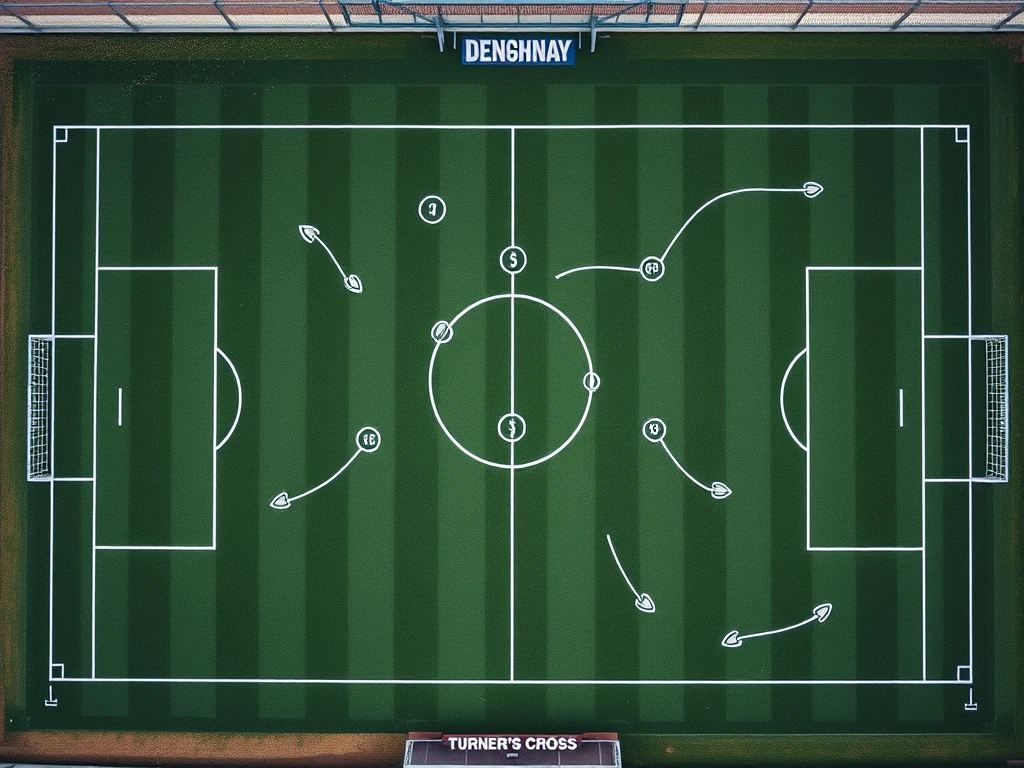
To address these issues, a shift towards a 4-3-3 formation could provide Cork City with greater fluidity and balance in both attack and defense. This formation would allow for a more compact midfield, enabling better ball retention and facilitating quicker transitions. By employing three central midfielders, Cork City can increase their numbers in the middle of the park, allowing them to dominate possession and create more opportunities for the front three.
Midfield Dynamics
In this revised formation, Cork City could deploy a holding midfielder such as D. Crowley, whose defensive awareness would help shield the back four while allowing more offensive-minded players to push forward. Pairing him with two box-to-box midfielders would enhance the team's ability to press and recover possession quickly, while also providing ample support for the attacking players. This dynamic could potentially free up players like Aidan James Bridge to make more incisive runs into the opposition’s half, creating additional options in the final third.
Width and Creativity
Additionally, re-evaluating the roles of the wingers is crucial. By encouraging them to cut inside more often, City can create space for overlapping full-backs to exploit the flanks. This not only adds depth to the attack but also offers greater chances for goal-scoring opportunities. The likes of C. Drinan and other forwards can benefit from this strategy, as it would allow them to operate in more advantageous positions closer to the goal, rather than being pinned to the touchline.
Defensive Cohesion
Defensively, Cork City must ensure that their back line remains organized and resilient. The introduction of a more disciplined defensive shape, particularly when the team loses possession, will minimize vulnerabilities. Encouraging the full-backs to maintain their positions rather than venture too far forward can help in reducing counter-attack risks, particularly against teams that thrive on quick transitions.
Conclusion
In summary, while Cork City has showcased potential through individual performances, adopting a more cohesive tactical approach could unlock greater team success. By implementing these tweaks-transitioning to a 4-3-3 formation, enhancing midfield dynamics, and refining width and defensive structure-Cork City can position itself as a serious contender in the League of Ireland Premier. With the right adjustments, the team can transform promising signs into consistent performances, ensuring a brighter path as they strive for league success.